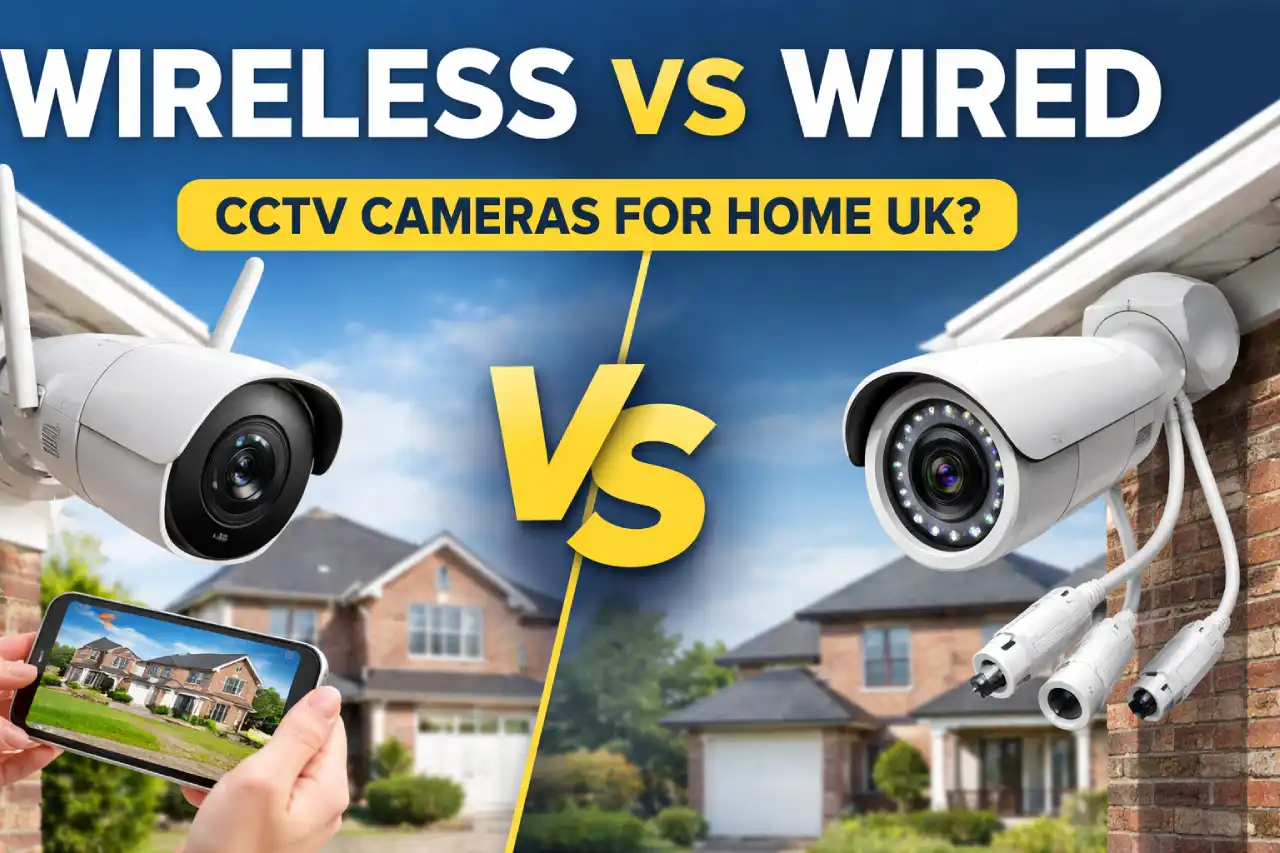
Wireless vs Wired CCTV Cameras for Home UK: Which One Should You Choose?
Choosing between wireless and wired CCTV cameras for home UK can feel confusing at first, especially when both systems offer strong home protection. The right option depends on how your property is set up, how much flexibility you want, and how you plan to use your cameras every day. Some homeowners want a system that is quick to install and easy to manage, while others prefer something more permanent and dependable for long-term security. Both types can help deter intruders, monitor your surroundings, and give you peace of mind whether you are at home or away.
At NightHawk CCTV, we help UK homeowners compare camera systems based on what really matters, such as installation, reliability, video performance, remote access, and day-to-day convenience. In this guide, you will learn the key differences between wired and wireless systems in simple language, along with the pros, cons, and important things to consider before choosing the best CCTV cameras for home UK.
What Are CCTV Cameras for Home UK?
CCTV cameras for home UK are security camera systems designed to monitor residential properties such as detached houses, semi-detached homes, terraces, flats, bungalows, and rental properties. These systems help homeowners watch over entrances, driveways, gardens, side paths, garages, and indoor spaces using live video and recorded footage.
In the UK, home CCTV has become increasingly popular because it offers both security and reassurance. A visible camera can discourage opportunistic crime, while recorded footage may help identify suspicious activity, parcel theft, trespassing, vandalism, or attempted break-ins. Modern systems also allow homeowners to view live feeds remotely through mobile apps, receive motion alerts, and store footage either locally or in the cloud.
When choosing CCTV cameras for home UK, one of the first decisions is whether to install a wired system or a wireless system. While both are built to protect your home, they operate very differently, and those differences matter more than most buyers realise.
What Is a Wired CCTV Camera System?
A wired CCTV system uses physical cables to connect each camera to a recorder, usually a DVR (Digital Video Recorder) or NVR (Network Video Recorder). These systems are often considered the more traditional and professional setup because they provide a stable connection and are designed for continuous use.
In most wired systems, cameras are mounted around the home and linked back to a central recording unit using video and power cables, or in the case of PoE (Power over Ethernet), a single cable can handle both power and data. Once installed, the cameras can record 24/7 and store footage locally for later review.
One of the main reasons many homeowners choose wired systems is reliability. Because the cameras are not dependent on a wireless signal in the same way, they tend to be more stable over long periods. This can be especially useful for larger homes, detached properties, or homes where uninterrupted recording is a top priority.
However, wired systems usually require more planning during installation. Running cables through lofts, walls, soffits, or exterior routes can take time, and in some homes it may need a professional installer to keep the setup neat and effective.
What Is a Wireless CCTV Camera System?
A wireless CCTV system sends video data over Wi-Fi rather than relying fully on physical video cabling. This makes it a popular option for homeowners who want a simpler and more flexible setup, especially in smaller homes or rented properties.
It is important to understand that “wireless” does not always mean “no wires at all.” Many wireless cameras still need a power source unless they are battery-powered. The main difference is that they do not need the same kind of wired connection back to a central recorder for video transmission.
Wireless systems are often chosen for convenience. They are easier to position, quicker to install, and can usually be managed through a smartphone app. Many homeowners like them because they can start with one or two cameras and add more later if needed.
That said, wireless cameras rely heavily on strong Wi-Fi coverage. If your broadband is weak in certain parts of the house, or if you have thick walls, extensions, or poor signal outdoors, camera performance may suffer. Delayed alerts, buffering, connection drops, and missed footage are all possible if the wireless setup is not planned properly.
Wireless vs Wired CCTV Cameras for Home UK: Quick Comparison
When comparing wireless and wired CCTV cameras for home UK, the best option depends on what matters most to you: ease of installation, reliability, flexibility, or long-term performance.
Wired CCTV is generally better if you want:
- More stable recording
- 24/7 continuous footage
- Better performance in larger homes
- Less dependence on Wi-Fi
- A more permanent security solution
Wireless CCTV is generally better if you want:
- Faster installation
- Easier DIY setup
- Flexible camera placement
- App-based convenience
- A system suitable for smaller homes or temporary setups
Neither system is automatically “better” for every household. The key is choosing the setup that fits your home layout, security goals, and how much maintenance you are comfortable with over time.
Installation Differences: Which One Is Easier?
For most homeowners, the first practical difference between these two systems is installation.
Wired CCTV Installation
Wired cameras usually take longer to install because each camera needs a physical route back to the recording unit or switch. In a typical UK home, this may involve routing cables through loft spaces, external walls, fascia boards, or internal ceilings. If done professionally, the result is often cleaner and more secure, but it requires more labour.
This is why wired CCTV is commonly installed by specialists rather than as a quick DIY project. It can still be very worthwhile, especially if you want a neat long-term system that does not need constant repositioning or charging.
Wireless CCTV Installation
Wireless systems are usually easier to set up, especially for homeowners who want a simple and quick solution. In many cases, you can mount the camera, connect it to your app, join it to Wi-Fi, and start using it in a relatively short time.
This flexibility makes wireless cameras attractive for renters, smaller homes, and people who do not want to run visible cables. However, easier installation does not always mean better coverage. Placement still matters, and poor Wi-Fi can quickly become a problem if cameras are installed too far from the router.
Which One Wins for Installation?
If ease and speed matter most, wireless CCTV cameras for home UK usually win. But if you want a professional finish with strong long-term reliability, a wired system often offers better value over time.
Video Quality and Recording Reliability
A camera system is only useful if it records clearly and consistently when something important happens.
Wired CCTV Performance
Wired systems are often more dependable for continuous recording. Since they are connected directly to a recorder or network, they are less likely to lose footage due to weak signal or temporary internet issues. This is especially important if you want cameras running all day and night without relying on cloud-based clips.
Wired systems also tend to perform better in properties where there are multiple cameras recording at once. This can help maintain smooth footage quality and reduce delays.
Wireless CCTV Performance
Wireless systems can offer excellent image quality too. Many modern models support HD or even 2K and 4K resolution. However, the actual performance depends heavily on Wi-Fi strength, network traffic, and battery status if the camera is not mains-powered.
In some homes, wireless cameras work perfectly well. In others, especially where signal strength drops outside or through thick walls, you may notice lag, missed motion events, or interruptions in live view.
Which One Is More Reliable?
If reliability is your top priority, wired CCTV usually performs better. If convenience matters more and your Wi-Fi is strong throughout the property, wireless can still be a very effective option.
Internet, Wi-Fi and Power Considerations
This is where many buyers get caught out.
Wired Systems
A wired CCTV system can often continue recording locally even if your internet goes down, as long as the recorder and cameras still have power. That is a major advantage for homeowners who want dependable coverage regardless of broadband issues.
You may still need internet access for remote viewing through your phone, but local recording itself is usually not affected in the same way as some wireless setups.
Wireless Systems
Wireless cameras depend more heavily on your home network. If your Wi-Fi drops or the signal is weak in outdoor areas, camera performance may be affected. Battery-powered wireless cameras also introduce another maintenance task: charging or replacing batteries regularly.
That does not mean wireless is a bad choice, it simply means you need to think beyond the camera itself. Your router location, broadband quality, and signal strength around the house all matter.
What Homeowners Should Check First
Before choosing wireless CCTV cameras for home UK, it is wise to check:
- Wi-Fi strength at the front door, garden, and driveway
- Whether the camera needs constant power or battery charging
- Whether the system records continuously or only on motion
- Whether footage is stored locally, in the cloud, or both
These small details can make a big difference in daily use.
Which Is Better for Outdoor Security?
Outdoor security is one of the most important uses for home CCTV, especially in the UK where cameras are commonly installed to monitor front doors, side access, driveways, and rear gardens.
Wired CCTV Outdoors
Wired cameras are often better suited to permanent outdoor protection. Once fitted properly, they can offer steady power, uninterrupted recording, and dependable performance in all seasons. This makes them a strong option for homeowners who want round-the-clock surveillance.
Wireless CCTV Outdoors
Wireless outdoor cameras can work very well too, particularly for front entrances or compact gardens where Wi-Fi coverage is strong. However, they may be less ideal in detached garages, rear garden corners, side alleys, or larger outdoor areas where signal drops become more likely.
Battery-powered outdoor cameras also need more ongoing attention. If the camera is placed high up or in a less accessible position, regular charging can quickly become inconvenient.
Best Choice for Outdoor Use
For homeowners wanting the most dependable outdoor coverage, wired CCTV often has the edge. For smaller outdoor spaces and convenience-led setups, wireless can still be a practical choice.
Which Option Is Better for Flats, Homes and Larger Properties?
Not every property needs the same kind of CCTV system.
Best for Flats and Small Homes
If you live in a flat, apartment, or compact terraced property, wireless cameras may be more than enough. These homes are often easier to cover with fewer cameras, and Wi-Fi signal is usually more manageable across a smaller space.
Best for Standard Family Homes
For average UK family homes, both options can work well. The better choice depends on whether you prioritise convenience or long-term stability. A hybrid approach can also work in some cases, for example, wired outdoor cameras and wireless indoor ones.
Best for Detached or Larger Homes
Larger homes often benefit more from wired CCTV because they usually need multiple cameras and wider coverage areas. These properties may also have more Wi-Fi dead zones, making wireless systems less consistent unless the network has been upgraded.
Property Type Matters More Than Marketing
A lot of security brands promote “easy smart cameras” as a one-size-fits-all solution, but in reality, your property layout should guide your decision more than product advertising.
Cost Comparison: Wireless vs Wired CCTV in the UK
Cost is always part of the decision, but the cheapest option upfront is not always the best long-term value.
Wireless CCTV Costs
Wireless systems often have a lower entry cost, especially if you start with one or two cameras. They can be attractive for homeowners who want basic coverage without major installation work.
However, there may be ongoing costs depending on the system:
- Cloud storage subscriptions
- Battery replacements or charging
- Wi-Fi extenders if coverage is weak
- Additional smart accessories or hubs
Wired CCTV Costs
Wired systems usually cost more upfront because installation is more involved. But they often provide better long-term value for homeowners who want a permanent setup with local recording and fewer recurring subscription costs.
Which One Is Better Value?
If you want something quick and simple, wireless can feel more affordable at first. But if you want reliable protection for years to come, a well-installed wired system may offer better value overall.
Common Mistakes Homeowners Make When Choosing CCTV
Choosing the wrong system usually happens when buyers focus only on convenience or price.
1. Buying based only on “easy setup”
A simple installation is helpful, but it should not come at the cost of poor recording or unreliable coverage.
2. Ignoring Wi-Fi strength
Many homeowners install wireless cameras first and only later discover weak signal in the exact areas they need to protect.
3. Choosing too few cameras
One front door camera is not always enough. Side access, rear entrances, and driveways often need attention too.
4. Forgetting storage options
Some systems only record short clips or require subscriptions for full footage access. Always check how recordings are saved.
5. Not thinking long-term
Your security needs may grow over time. It is worth choosing a system that can scale with your home and lifestyle.
Best Choice Based on Your Needs
Here is the simplest way to decide between the two:
Choose Wired CCTV If:
- You want 24/7 recording
- You prefer long-term reliability
- Your home is large or detached
- You want stronger outdoor coverage
- You do not want to rely heavily on Wi-Fi
Choose Wireless CCTV If:
- You want easier installation
- You live in a flat or smaller home
- You want app-based convenience
- You prefer flexible placement
- You are happy to manage Wi-Fi and battery upkeep
Best All-Round Advice
For many homeowners in the UK, the best system is not necessarily the newest or most advertised, it is the one that matches the property and the level of security required.